Blackouts in Woodside
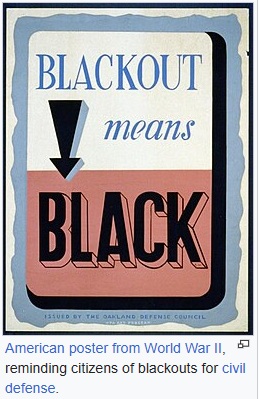
During World War II, when I was a youngster living in Woodside, Queens, New York, I remember something that would seem rather unusual today. We had mandatory blackouts, and there were neighborhood volunteers whose job was to make certain that everyone complied.
Our family lived at 51-01 61st Street, in a two-story row house on the corner of 51st Avenue. I was only three years old when the Japanese attacked Pearl Harbor on December 7, 1941, but I have definite memories of the blackout procedures that followed.
Why the City Went Dark
The purpose of the blackouts was to prevent enemy aircraft and submarines from using the lights of New York City and the surrounding coastal communities for navigation or targeting. German submarines were operating off the Atlantic coast, and the possibility of an attack on New York was taken seriously.
Following Pearl Harbor, New York expanded its civilian-defense preparations. Beginning in June 1942, mandatory coastal dimout regulations restricted visible lighting at night. These restrictions continued until November 1943, although air-raid precautions and blackout drills remained in effect afterward.
Blackout Shades and a Curious Youngster
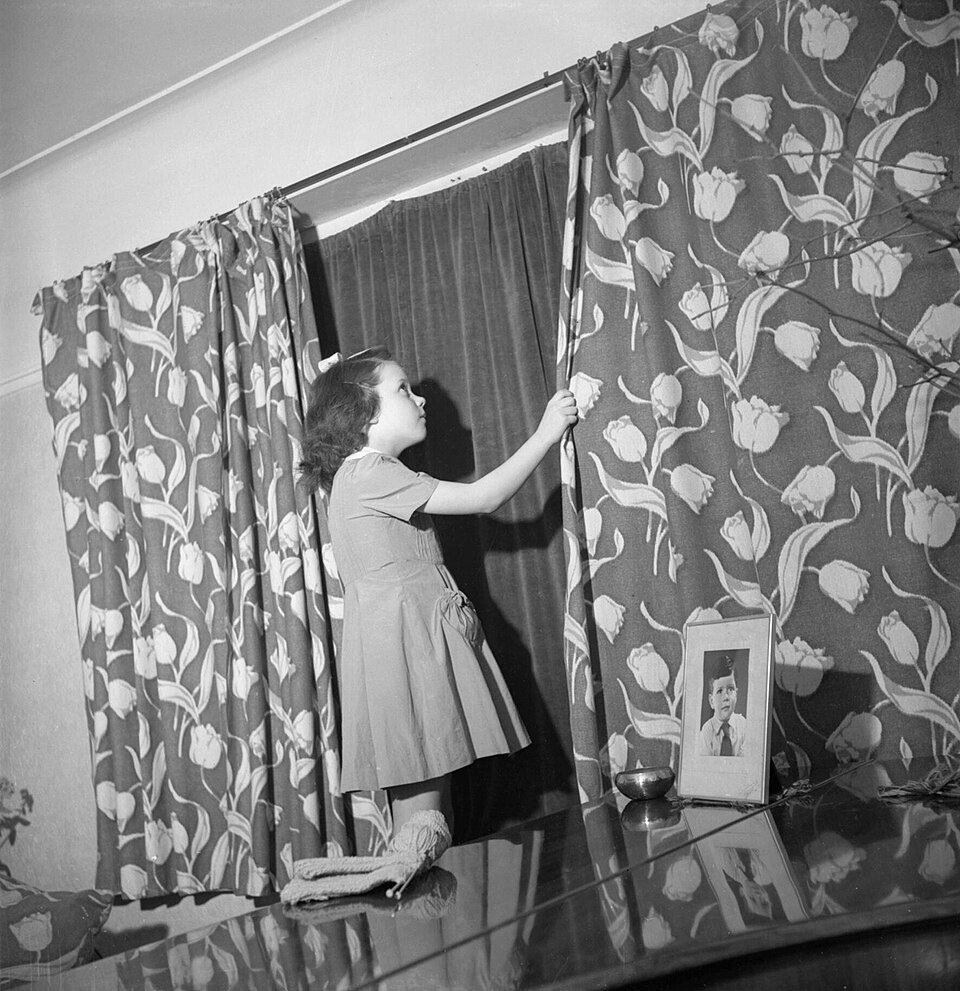
I remember that our windows had pull-down blackout shades, with curtains on either side. These were intended to prevent any light from escaping the house after dark. Families could have lights on inside, provided the windows were properly covered, except when stricter blackout orders required additional precautions.
Being a curious youngster, I occasionally wanted to look outside. If I pulled back the shade or curtain and allowed light to escape, someone might come knocking at our door to remind us of the regulations. I remember that happening.
Who Were These People Who Came to Our Door?
They were neighborhood air-raid wardens, part of a large civilian-defense organization established to protect the public during wartime. New York State established its Office of Civilian Protection in 1941, and New York City's air-raid warden organization worked under the supervision of the Police Department.
The wardens were generally ordinary citizens who volunteered to help protect their own neighborhoods. They received training and were assigned to small geographic areas, called posts. A typical post might cover approximately 500 residents, perhaps only a few blocks of closely spaced houses. Several posts made up a sector, and sectors were organized into larger zones.
This meant that the person checking our windows could very well have been one of our neighbors, someone living only a few doors away. I don't remember who our wardens were, but I would be interested to learn their names.
During a blackout, wardens walked their assigned streets, watching for lights escaping from windows, doors, or porches. They could knock on doors and instruct residents to correct violations. They also helped organize emergency responses, directed people toward shelters, and reported fires or other dangers. Some carried flashlights that could be directed downward so that they would not illuminate the surrounding area.
Pails of Sand in Our Closets
I also remember another part of our wartime preparations. We had galvanized metal pails filled with sand, stored in our closets. These were intended for controlling small fires, particularly those that might be started by incendiary bombs. Sand could be used to smother certain fires without spreading burning material.
Fortunately, our sand pails were never needed. They remained in the closets throughout the time I remember living there. Whatever eventually happened to them, I don't know.
A View Toward Manhattan
Another recollection is looking out from an upstairs front window and being able to see toward Manhattan. I believe I could see part of the city from there. Considering how much light New York generated, it is understandable why officials were particularly concerned about uncovered upper-story windows.
Wartime Preparations Through a Child's Eyes
As a youngster, I probably didn't appreciate the seriousness of the threat. To me, the blackouts were simply part of everyday life, along with the window shades, the sand pails, and the occasional knock on the door.
New York City was never subjected to the German bombing raids that devastated many European cities. The elaborate civilian-defense system was therefore never tested by a major enemy air attack, and the sand pails in our home were never used.
Looking Back More Than Eighty Years Later
Looking back more than eighty years later, what impresses me is how thoroughly ordinary citizens participated in the war effort. Hundreds of thousands of New Yorkers volunteered for civilian protection, and individual neighborhoods were organized so that someone was responsible for watching over just a few blocks.
I was too young to understand the organization behind it all. But I remember the blackout shades, the pails of sand, and the people who came to our door when a little boy became curious about what was happening outside.
Historical Photo
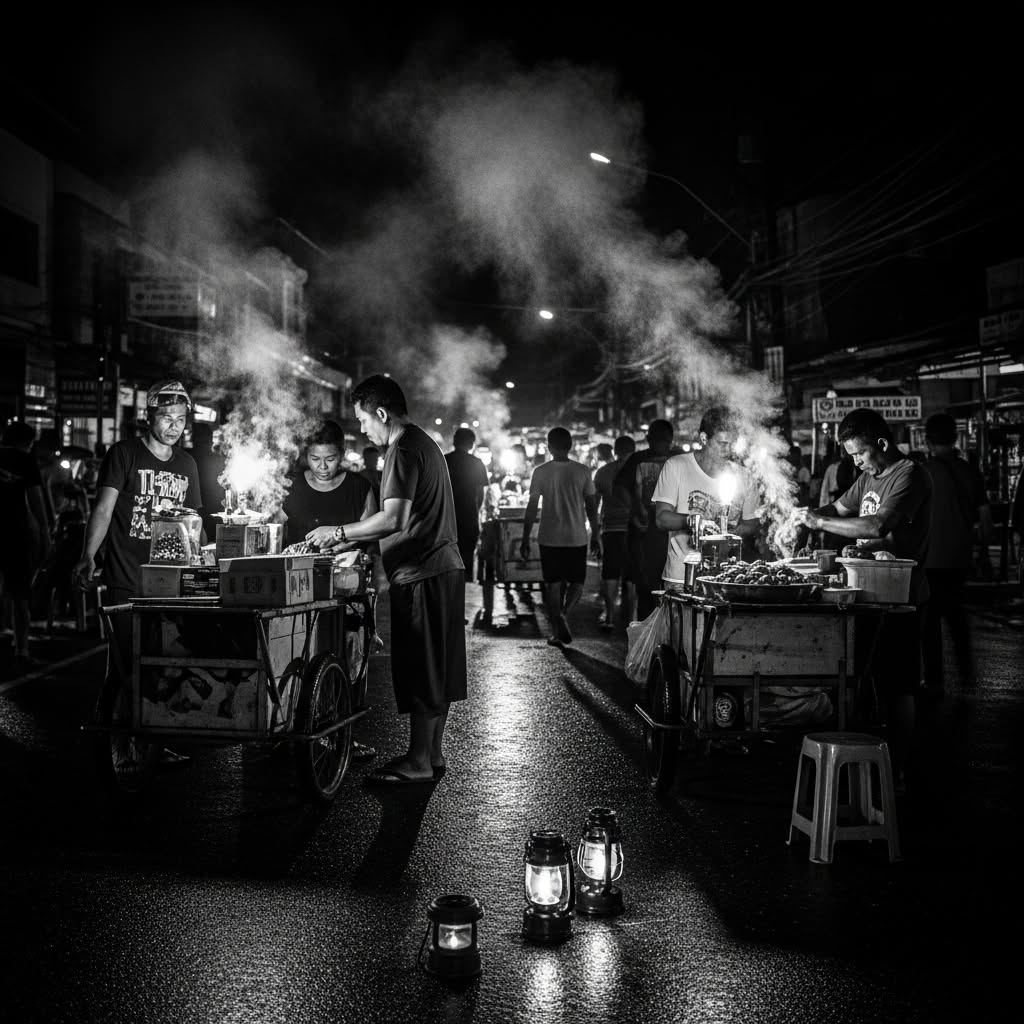
Street vendors sold bread, soup, and roasted nuts even during blackout nights. They carried lanterns dimmed by cloth, hiding from patrols. Hungry workers coming out of shifts relied on them for quick meals. Despite rationing, vendors stretched supplies by mixing ingredients. Their stalls were a light of comfort in darkened cities.
In Detroit
During the 1940s and 1950s, cities such as Detroit would practice blackout air raid drills. During this time, the city's Civil Defense workers would immediately activate the neighborhood air raid siren, and families would be required to do the following in order:
- Shut off all appliances, such as stoves, ovens, and furnaces.
- Shut off valves for water and natural gas or propane, as well as disconnect electricity.
- Close blackout curtains (plain black curtains that would block light from coming in or going out). This step was changed after the atomic age began: white curtains were used to reflect the thermal flash of the bomb. Black curtains were used in World War II to prevent any airborne enemies from seeing light from windows.
- Get to a public shelter, a fallout or bomb shelter, or the household basement, and stay there until the local police or block warden dismissed the blackout.
Blackout Curtain
About Woodside, Queens from Wikipedia
A community profile, published in 1943, characterized Woodside (along with Winfield, its neighbor to the south) as "a district of small homes and middle incomes." The area still had few apartment buildings and very little industry. Although the rapid population growth of the 1920s had fallen off in the 1930s, the authors of the profile expected improved transit (the IND Queens Boulevard Line which opened in 1933) and a new shopping center to draw larger numbers of new residents. The number of single-family houses is given as 2,159, double-family houses as 1,711, and larger residential buildings as 868.