Life at a Cottage - Lakeville Lake, Oakland County
By Ernest L. Maier — October 2026
In our daily lives, there are certain functions that are absolutely necessary. We need water to drink, water to wash with, and some means of taking care of our most basic bodily needs. These necessities have not changed, but the ways in which we provide for them certainly have.
As I write this in October 2026, I realize that many people living today have little understanding of how Americans lived in the years between 1945 and 1955. I'm not talking about people living in poverty or in some remote wilderness. I'm talking about ordinary, decently employed families who lived comfortably by the standards of their time.
Our family was one of them.
During those years, we lived in Detroit, on Seminole Street, near Mack and Warren. We had the normal conveniences of city life. We could turn on a faucet and get water. We could adjust the thermostat and the heat would come on. And when nature called, we had an indoor bathroom.
As I remember it, that house had only one bathroom, upstairs, which served our family of four. Later, when we moved farther out on Detroit's east side to Balfour Street, we had even more conveniences. That house had one full bathroom and several partial bathrooms. Water was available in the kitchen, the basement, and the bathrooms. We simply turned on a faucet whenever we needed it.
We took all of this for granted.
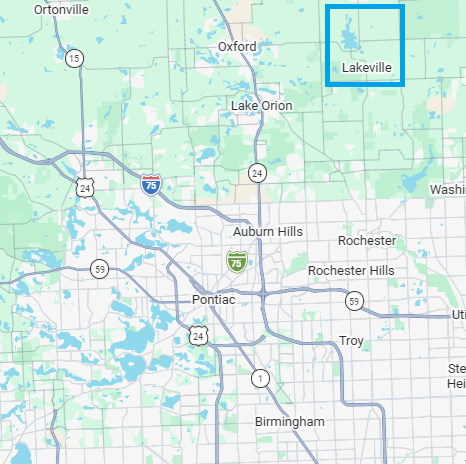
But during those same years, our family also spent considerable time at our cottage on Lakeville Lake in Oakland County, Michigan. And life at the cottage was an entirely different experience.
There, even the simplest necessities required some ingenuity, physical effort, and cooperation among the members of the family.
Getting a Drink of Water
At the cottage, we couldn't simply turn on a faucet.
There weren't any.
Our only source of water inside the cottage was a hand-operated pump in the kitchen. It had a red handle, and when I was five or six years old, I didn't pay much attention to how it worked. Water was there when we needed it, and that was enough for me.
But eventually, my grandmother, my mother, or one of my aunts explained what that red handle was for.
The pump brought water up from a well beneath the cottage. There were no elaborate filtering systems, no testing equipment that I knew about, and certainly no automatic electric pump. The water was down there, and if we wanted it, we had to bring it up ourselves.
And sometimes, before the pump would work, it had to be primed.
That was a new word to me.
Priming meant taking some water that had been saved in a container and pouring it into the top of the pump. Somehow, that allowed the pump to begin drawing water from below.
I didn't understand the mechanics of it, but I understood what I had to do.
If I wanted a glass of water and the pump wasn't working, I took some of the water that had been saved, poured it into the pump, and started working that red handle.
Soon enough, water would come out.
But there was another rule. Before I finished pumping, I had to make sure there was water left in the container for the next person who needed to prime the pump.
I can't remember exactly what kind of container we used. It might have been a glass pitcher or a metal pot, depending on who was in charge of the kitchen that day.
But I remember the procedure.
It was one of my earliest lessons in the fact that conveniences don't always happen automatically. Sometimes, somebody has to do something to make them work.
Eventually, my father and my uncles figured out a better arrangement.
They installed an electric pump somewhere in the system. I have no idea where they put it or exactly how they connected everything, but the cottage already had electricity, and that made the improvement possible.
One day, instead of working the red handle, we could simply turn on a faucet and get water.
That was quite a change.
But before we reached that stage, another necessary function of daily life had already undergone an even more interesting transformation.
The Outhouse
At home in Detroit, we had an indoor toilet. At the cottage, we didn't.
Instead, we had an outhouse.
It was a little wooden building, something we might call a shed today, located on the street side of the cottage rather than the lake side.
The men in the family had dug a hole in the ground and constructed this little building over it. Inside was a wooden board with two holes, each fitted with a toilet seat.
It was called an outhouse for the simplest possible reason: to use the toilet, you went out of the house.
There were two seats, and I eventually discovered something rather interesting about that arrangement.
The men, as far as I ever observed, always went alone. In fact, I sometimes suspected that some of them had found other ways of taking care of their needs.
But the women were another matter.
My grandmother and certain aunts sometimes went to the outhouse together. I don't particularly remember my mother doing that, but I do remember other female relatives going in pairs.
And it finally dawned on me why there were two holes and two toilet seats.
Apparently, they enjoyed the company!
Both seats emptied into the same hole in the ground. I never gave much thought to why anyone would want company for such an activity, but that was the arrangement, and nobody seemed to find it particularly unusual.
There was another difference between the outhouse and our bathroom in Detroit.
Toilet paper.
At home, we had ordinary toilet paper. But at the cottage, at least in the earlier years, we used newspapers, magazines, or whatever suitable paper happened to be available.
Eventually, somebody decided that the outhouse deserved a little modernization, and rolls of toilet paper appeared on the walls, one for each seat.
That was progress!
Over time, the outhouse acquired other improvements. I remember a crescent-moon opening in the door, and I believe there were some decorations painted on it as well.
Eventually, somebody even ran an electric line from the cottage out to the outhouse.
Now we had a light bulb!
As I remember it, there was a little chain hanging from the fixture. You could walk into the outhouse at night, pull the chain, and actually see what you were doing.
That was another considerable improvement over the original arrangement.
But the outhouse had one problem that no amount of decorating or electrical wiring could solve.
Eventually, the hole beneath it filled up.
Moving the Outhouse
Every once in a while, there would be a certain amount of excitement and discussion among the adults.
I wasn't part of those conversations, but I eventually learned what they were about.
The outhouse needed to be moved.
The men would agree that on the coming weekend, instead of spending all their time swimming, canoeing, or enjoying the lake, they would have a job to do.
They were going to dig another hole.
And this was no small undertaking.
Everything was done by hand. The men would get together, take their shovels, and begin digging a new pit behind the existing outhouse.
I remember watching the operation. It was quite an organized event.
Somehow, they moved the wooden outhouse off its original location. I don't remember exactly how they accomplished that. Perhaps it rested on heavy timbers that allowed them to lift or slide it out of the way.
But they moved it.
Then they dug the new hole, and as they removed the earth, they used that dirt to fill the old pit, which had already served the family for a considerable period.
That struck me as a rather sensible arrangement. The dirt from the new hole became the material needed to cover the old one.
When the digging and filling were finished, the men moved the outhouse over its new location, made sure the seats lined up properly, and put everything back in working order.
And that was that.
The outhouse was ready for another few years of service.
Looking back, I realize how much work was involved in something that today we accomplish by simply pressing a handle on a toilet.
But at the time, it was just another part of life at the cottage.
Uncle Otto's Better Idea
Eventually, my Uncle Otto decided there ought to be a better way.
Uncle Otto was the mechanically inclined member of the family. He had worked as some kind of machinist and understood pipes, fittings, tools, and mechanical arrangements.
My father wasn't particularly involved in those kinds of projects, at least not as I remember him, and I don't know how much my Uncle Al knew about such things.
But Uncle Otto was the man who could figure them out.
Somewhere along the way, he acquired an ordinary household toilet. I don't know whether it had been removed from one of our Detroit homes, purchased secondhand, or obtained some other way.
But we had a toilet.
And Uncle Otto had a plan.
At the back of the cottage was a narrow porch, perhaps six feet wide at most, running along the rear of the building. I don't remember exactly when that porch had been constructed.
Uncle Otto decided to partition off an area at the far right end of it and install the toilet there.
But having a toilet was only part of the problem.
Where would everything go after the toilet was flushed?
Uncle Otto and the other men began digging a large hole outside the porch wall.
And I mean a large hole.
This wasn't something they completed in a single weekend. As I remember it, the project occupied a good part of one summer.
They acquired two large steel drums, the kind commonly called 55-gallon drums. I don't know where they came from.
They punched numerous holes in one drum and fewer holes in the other. Then they connected the drums with piping and arranged for a pipe to run from the toilet into this homemade underground disposal system.
They didn't have a conventional septic tank or a professionally installed septic field.
They had two steel drums, some pipes, a lot of digging, and Uncle Otto's ingenuity.
And somehow, they made it work.
There was, however, one rather important detail missing.
Water.
A Toilet Without Running Water
By this time, I was probably nine, ten, or eleven years old.
The indoor toilet had been installed, but the cottage still didn't have a pressurized water system connected to it.
Uncle Otto had solved the problem of where the waste would go, but he hadn't yet solved the problem of how to flush the toilet.
So the family came up with another arrangement.
They acquired about half a dozen galvanized metal pails. I don't remember their exact capacity. I doubt they held five gallons each; perhaps they were closer to three gallons.
The pails were lined up along the inside wall near the bathroom.
And I was given a job.
My responsibility was to make sure those six pails were always filled with water.
Now, where did the water come from?
Lakeville Lake, of course.
When the pails were empty, I would take them down to the lake. The route went through a lean-to type garage that had been constructed along the right side of the cottage, facing the water.
The garage had a dirt floor. I would walk through it, go down toward the lake, and fill the pails.
Then I would carry them back through the garage, through the screen door, and onto the porch, where I would line them up neatly near the toilet.
I had become the cottage's official toilet-water supplier.
And there was a rule about how that water was to be used.
The adults taught me a little saying that I thought was very funny:
"If it's yellow, let it mellow. If it's brown, flush it down."
That was the rule.
If somebody used the toilet for what we called number one, they simply left it alone.
But if somebody used it for number two, then it was time to flush.
And flushing required a pail of water.
You lifted the toilet seat, took one of the galvanized pails, and poured the water directly into the bowl with enough force to cause the toilet to flush.
There was no need to fill a tank. In fact, I don't even remember whether the toilet originally had a tank.
You simply poured the water into the bowl, and away everything went.
The system worked.
But it only worked if there was water available.
And that was my responsibility.
"Ernie, Did You Check the Water?"
I particularly remember the times when I stayed at the cottage with my grandmother and my Aunt Beulah, who was married to Uncle Al, my father's sister.
They were very good about making sure I remembered my responsibilities.
Every evening, before bedtime, there would be the familiar question.
"Ernie, did you check the water?"
And sometimes, of course, I hadn't.
So off I would go.
I would walk back through the garage, down toward the lake, and fill whatever pails were empty.
There were steps near the water and a dock, and I knew the route well.
Sometimes I had to make more than one trip.
But eventually, all six pails would be filled and lined up where they belonged.
Then I could come back inside, get ready for bed, and say my prayers.
And when Grandma or Aunt Beulah asked whether I had taken care of the water, I could proudly answer:
"Yes, Grandma. I did it."
And they would smile.
That smile meant something to me.
I was still a young boy, but I had been given a real responsibility. The adults were depending on me, and I knew it.
I wasn't just playing at having a job. I had one.
If somebody needed to flush that toilet during the night, there had better be water available.
And I was the person responsible for making sure there was.
I took considerable pride in that.
The Day Everything Changed
Eventually, Uncle Otto and the other men completed the next improvement.
The electric pump that had been installed to supply the kitchen was connected, somehow, to the toilet.
I don't remember exactly how they ran the piping. Perhaps they took it beneath the floor. Perhaps they drilled holes through the structure. I was too young to pay much attention to the technical details.
But I remember the result.
One happy day, Uncle Otto announced that the toilet was ready to be used with running water.
We could flush it without carrying a pail from the lake.
Imagine that!
No more trips down to the dock to fill six galvanized buckets.
No more worrying about whether somebody had used the last pail.
No more evening reminders from Grandma and Aunt Beulah to check the water.
The toilet worked just like the one we had in Detroit.
And the cottage had taken another step toward what we considered modern living.
Looking Back
Today, at eighty-eight years of age, I can turn on a faucet in my home and get water instantly. I can flush a toilet without giving a moment's thought to where the water comes from or where everything goes afterward.
Most people living today have never had to prime a hand pump to get a glass of drinking water. They've never used an outhouse with two seats, watched their relatives dig a new pit for it, or carried galvanized pails of lake water to flush an indoor toilet.
And I suspect many younger people would find those arrangements almost unbelievable.
But that was our life at the cottage on Lakeville Lake.
We weren't living in poverty. We weren't pioneers settling some remote territory. We were an ordinary American family, enjoying a cottage on a beautiful Michigan lake in the years following World War II.
We had electricity. We had a lake to swim in, boats to enjoy, and relatives who gathered together for weekends and summer vacations.
What we didn't always have were the conveniences that people now consider necessities.
And when something needed improving, the family figured out how to improve it.
My uncles dug holes, moved buildings, installed pipes, and devised ways to make ordinary life a little easier.
And I carried the water.
Of all those memories, I think one of the most satisfying is remembering how proud I was when Grandma asked whether I had checked the water and I could tell her that I had.
It was a small responsibility in the larger scheme of things.
But to a young boy, it was important.
And perhaps that is one of the things that has changed most over the years. Today, so many of life's necessary functions happen automatically that we seldom think about the effort once required to accomplish them.
At Lakeville Lake, we knew that somebody had to make things work.
And for a few years, when it came to flushing the toilet, that somebody was me.