Europe at Age 19 — How It All Began
This story describes how my first European adventure began and some of the memorable experiences along the way. My day-to-day itinerary is in another file, and photographs from the trip are stored elsewhere. When our family went to Europe in 1983, we followed essentially the same route on a trip I organized through my travel program at Lawrence Technological University, which ran from 1980 to 1991.
The Opportunity at the University of Detroit
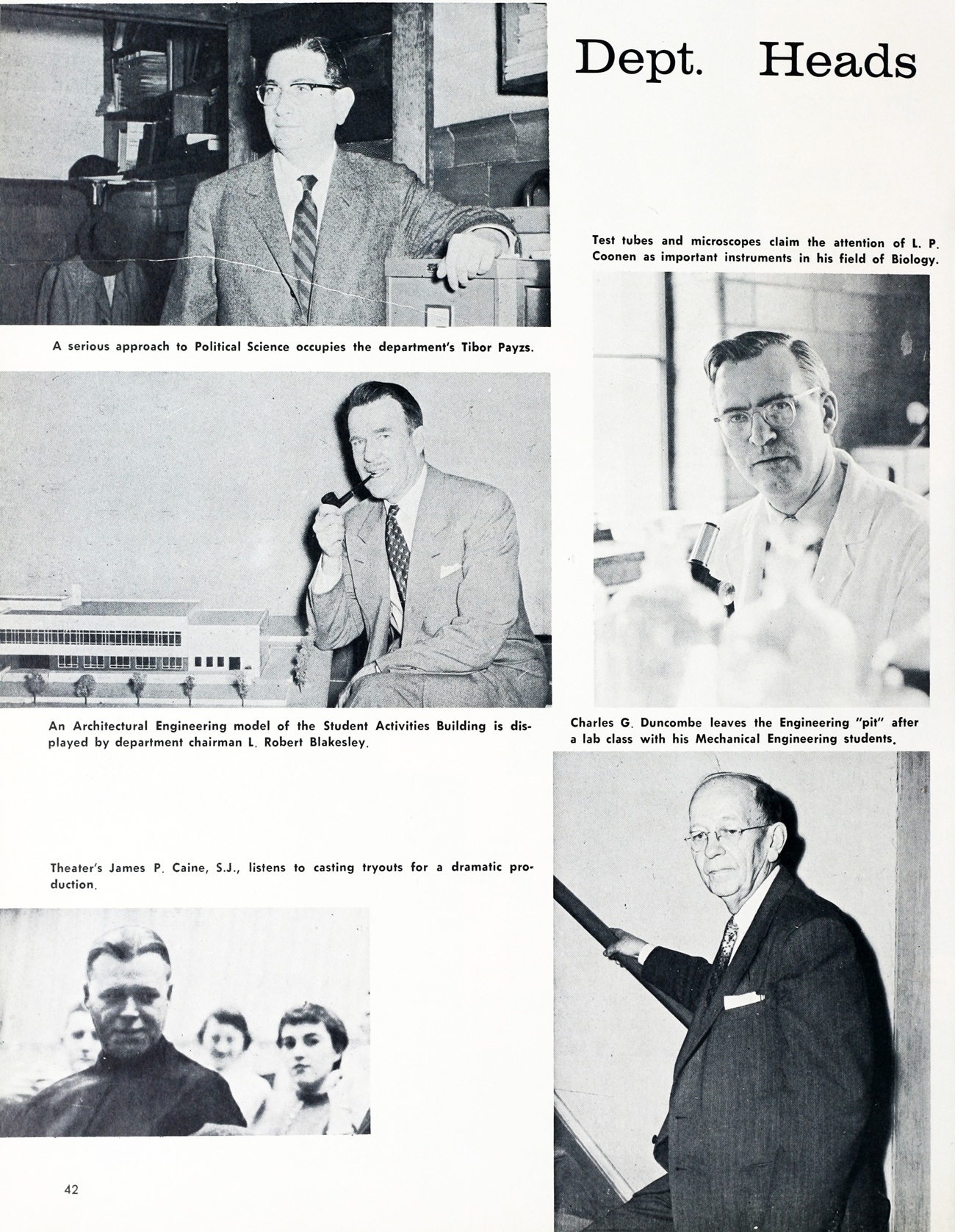
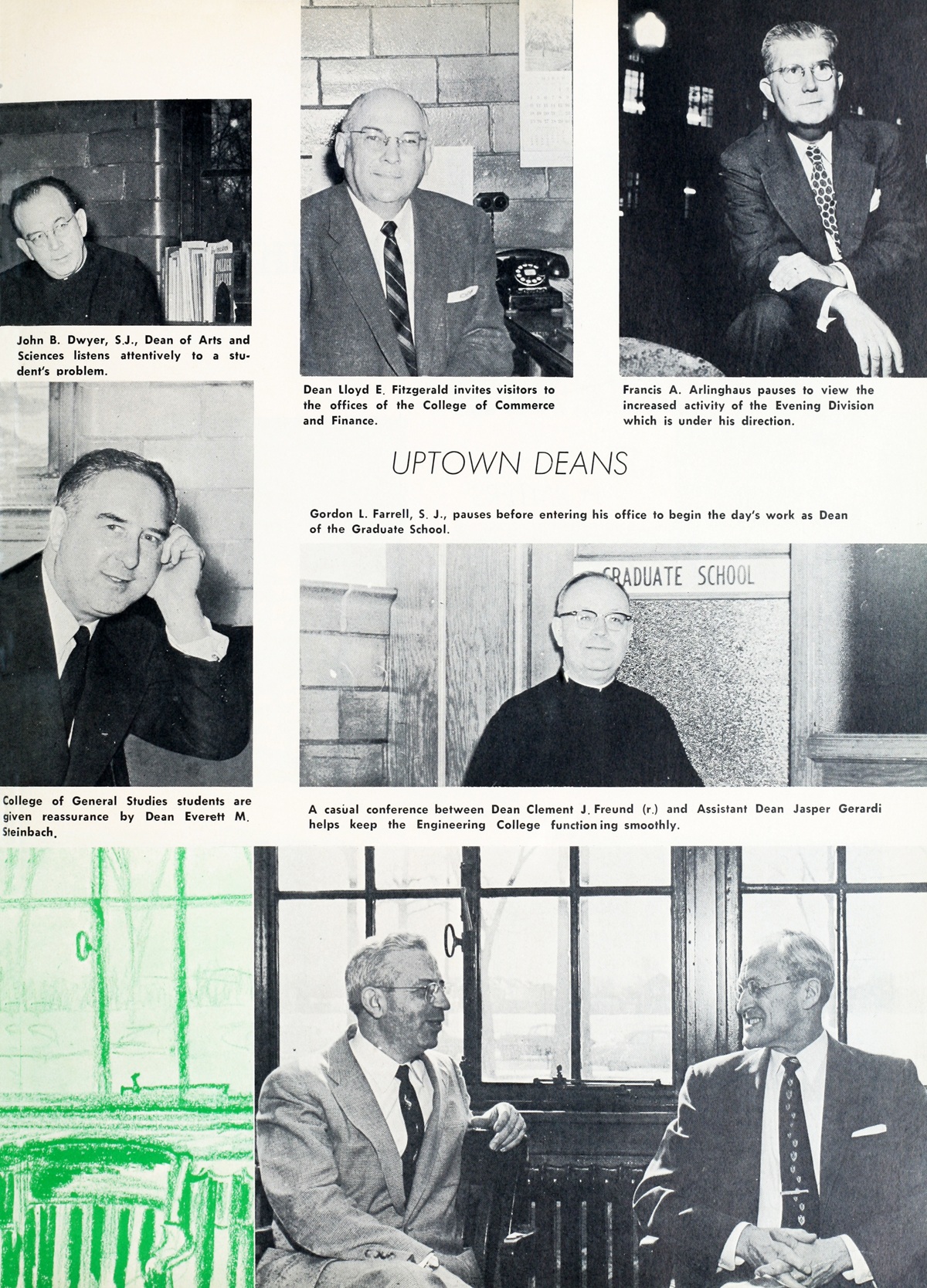
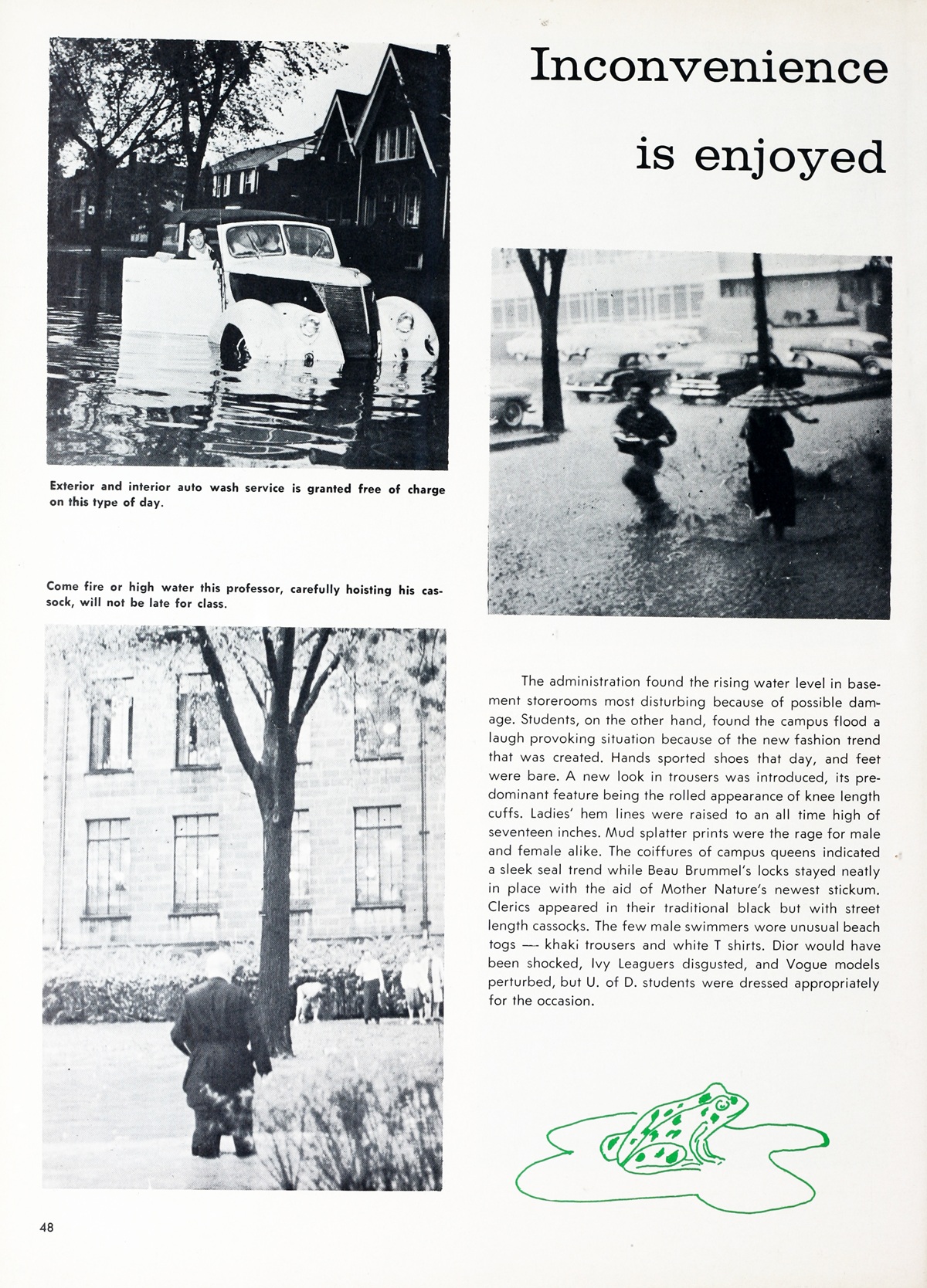
During the 1956-1957 academic year, I was a freshman at the University of Detroit. One of my courses was Economic Geography, taught by a remarkable person, Marjorie Goodman. She was very tall, probably six foot two inches, very engaging as a teacher, and I particularly remember her walking around the classroom carrying a globe as she discussed continents, countries, and various aspects of economic geography. She was an excellent teacher.
I believe she was an Adjunct Professor. Her husband was Robert J. Goodman, was a Professor at Wayne State University and, as I remember it, worked particularly with graduate students studying geography.
One day, toward the end of class, she announced that her husband was organizing a summer trip to Europe for a group of students. Most were graduate students studying geography, including some working toward doctoral degrees. There was one opening available, and he had asked her to mention it to her students at the University of Detroit.
The trip would cost $804, including transportation to and from Europe aboard the T.S.S. Columbia, an ocean liner sailing from Quebec, Canada. A $50 deposit was required. When class ended, everyone left as usual, and I do not remember anyone else showing particular interest. But the announcement stayed with me.
I had been attending the World Adventure Series at the Detroit Institute of Arts, where travelers and explorers presented illustrated accounts of their experiences around the world. Those presentations had stimulated my interest in seeing other countries. Now, here was an opportunity to actually go to Europe.
By the next class, I had $50. I do not remember whether I took it from a savings account, checking account, or somewhere else, but I brought the money to class and handed it to the professor. I think she was surprised. There was no great discussion or announcement; she simply accepted the money. Just like that, I had committed myself to a summer in Europe.
She explained that there would be meetings before departure so the participants could get acquainted and learn more about the arrangements.
Preparing for the Trip and Meeting Zeke
I attended the meetings, although I no longer remember exactly where they were held. They may have been at Wayne State University. A woman served as the group leader. These meetings were conducted by Arlene Schindler, a doctoral student who was with us during the trip as our Group Leader, and later earned her PhD and led a long life in the educational community.
When I began dictating these recollections, I could not remember her name, although I knew I had it somewhere in the notes on my phone. I later located those notes and identified her as Arlene Schindler, Ph.D., who was associated with Wayne State University.
One participant I remember particularly well was Alan “Zeke” Zondlak. As far as I know, Alan later became a teacher. I remember learning that he had undertaken an unusual geography project: visiting every county in the United States and mailing himself a postcard from each one.
Years after our European trip, I encountered Alan at an academic conference and greeted him as I had known him in 1957, calling him “Zeke.” He came up to me and said something to the effect of, “Ernie, it’s Dr. Zandlak now.” My response was simply, “Okay, Zeke.” That little exchange is probably why I have never forgotten him.
Alan introduced me to two other people who were going on the trip. The three of them were pleased to have me join them because we could travel together by automobile from Detroit to Quebec, where we would board the ship. I do not remember whose automobile it was, although I suspect it may have belonged to Alan.
Driving from Detroit to Quebec
We drove from Detroit to Quebec through the Adirondack region of New York State. The drive itself was a wonderful experience, taking me through country I had not previously explored.
Before leaving, Alan instructed each of us to bring an additional $20. We were to place the money in the automobile’s trunk and leave it there while we were away. The idea was simple: when we returned from Europe, each of us would have $20 available to help pay for the drive back to Detroit.
When we reached Quebec, we took the automobile to a church where Alan had arranged for it to be kept during the summer. I do not know whether someone at the church stored it or used it while we were away. I also do not remember exactly where we stayed that night, but one incident from the evening has stayed with me.
My First Cigarette on the Quebec City Waterfront
The night before we boarded the Columbia, the four of us were together along the waterfront in Quebec City. We may have taken our luggage aboard the ship earlier, although I do not remember that detail. We were preparing to depart the following day.
In 1957, several establishments along the waterfront were what I would describe as rather sleazy bars, or perhaps workingmen’s bars. They were frequented by local people and were not necessarily the sort of places a tourist would seek out today. We went into one of them, probably to have dinner and something to drink, and began playing darts.
My three traveling companions were older than I was. I was only 18, while they were probably in their early to middle twenties, perhaps 22 to 25. As we played, some local French-speaking men joined us. I imagine they were attracted by the sight of four young Americans playing darts in their neighborhood bar. They spoke French and we spoke English, but we managed to communicate and enjoy the game.
The local men were smoking cigarettes, which was very common in those days. I was not a smoker and had never smoked a cigarette. At some point, one of the Frenchmen took out a package, lit a cigarette for himself, and offered me one. I declined.
I do not know whether we had been beating him at darts or whether something else had annoyed him, but he became a little belligerent when I refused. I sensed that the situation might become uncomfortable and decided that perhaps Ernie had better try smoking a cigarette. So I accepted one.
The problem was that I had absolutely no idea how to smoke it. I even had difficulty lighting it. Eventually, I managed to get it lit well enough to satisfy the Frenchman, and he relaxed. I do not remember actually smoking much of it. I probably put it down somewhere and returned to playing darts.
But I have never forgotten the incident. There I was, an 18-year-old American boy about to embark on his first trip to Europe, standing in a waterfront bar in Quebec City and trying to smoke a cigarette because a French-speaking stranger had become irritated when I refused one. That was my first cigarette, and quite possibly my last. I certainly cannot remember another as vividly.
Many years later, Jean and I returned to Quebec City in our motorhome, perhaps ten or fifteen years before I began writing these recollections in 2026. We visited some of those same waterfront areas, although the neighborhood had changed considerably since 1957.
Perhaps someday Dave will visit Quebec City and walk along that waterfront. If he does, he may be able to picture the setting where his father, at age 18, smoked his first cigarette on the eve of an adventure across the Atlantic.
Crossing the Atlantic aboard the Columbia
The Atlantic crossing took approximately nine days. It was memorable, although part of the voyage was quite rough, and I became seasick. I distinctly remember standing at the stern and looking down toward the water. The ship rolled and pitched so dramatically that, at times, we could actually see the rudder emerge from the water. That gives some indication of the conditions we experienced.
Nevertheless, I enjoyed the crossing. The ship carried many students, including an entire group from California, and there were plenty of opportunities to meet people, socialize, and enjoy traveling across the Atlantic together.
I became acquainted with a young woman from the California group. We enjoyed each other’s company in a pleasant, social, and entirely platonic way. I remember some kind of king-and-queen contest as part of the ship’s entertainment. Although I do not remember all the activities we participated in, having a young woman to spend time with certainly made the voyage more enjoyable.
I was still 18 when we began the journey. I was born on August 1, 1938, and we departed in June 1957, so I turned 19 while traveling in Europe that summer. I worked out that detail more carefully while preparing these recollections.
Our ship arrived in Liverpool, England, probably in the middle of June 1957. I also remember seeing the White Cliffs of Dover during our travels, although that may have happened later, when we crossed the English Channel to reach continental Europe.
Identifying the Ship Nearly Seventy Years Later
In October 2026, while preparing these recollections, I worked with ChatGPT to research the ship. The vessel was identified as the T.S.S. Columbia, operated by the Greek Line. According to that research, it was originally built in 1913 under the name Katoomba and renamed Columbia in 1949.
For many years, I believed T.S.S. stood for “Turbine Steamship,” apparently because someone had told me that at the time. I had never investigated it. The later research identified the designation as “Twin Screw Steamer.”
ChatGPT located historical photographs of the vessel, including an aerial photograph that I examined carefully. It was especially convincing because it showed the decks much as I remembered them, including the open areas where passengers could walk and the stern where I had watched the rudder emerge from the water. I did not remember a swimming pool, and the photograph showed no obvious pool.
After examining those photographs, I have no doubt that this was the ship on which I crossed the Atlantic in 1957.
The research also suggested a Liverpool visit by the Columbia during June 13–15, 1957. My recollection is that we departed Quebec around June 7 and spent approximately nine days at sea. These dates remain tentative; the precise sailing dates and passenger manifest have not yet been confirmed.
Reconstructing the Return Voyage
One question that arose while reviewing these memories was where we boarded the Columbia for the return voyage to Quebec. I do not remember returning to England to board the ship, so we investigated whether it sailed from other European ports.
The research indicated that the Greek Line served several European ports, including Le Havre, France, and Bremerhaven, Germany, and identified a possible voyage dated August 4–14, 1957.
My present belief is that we may have boarded at Le Havre for the return crossing. I remember being in Paris during the trip, and Le Havre would have been a logical departure port.
The proposed dates also fit the circumstances of my traveling companions. Many were teachers or graduate students preparing for teaching careers and would have needed to return to Michigan before the fall school year.
If we arrived in Quebec around August 14 and allowed another three or four days to retrieve the automobile and drive to Detroit, we would have returned around August 18. That would have given the teachers time to prepare for the school year beginning in late August or September.
This trip remained vividly with Ernie, and, as a Professor at LTU, he created a program that offered business students similar trips rom 1980 through 1991. Ernie created the trips and the coursework and led at least 12 such trips in those years.
Most important of these trips was his re-creation of the same trip in August of 1983. In those 31 days Ernie, his wife Jean and their three adult kids, Karen, Mike and Dave, joined the group of students.
This is a reasonable reconstruction, but I have not yet verified the return port or exact sailing dates against my original travel records.
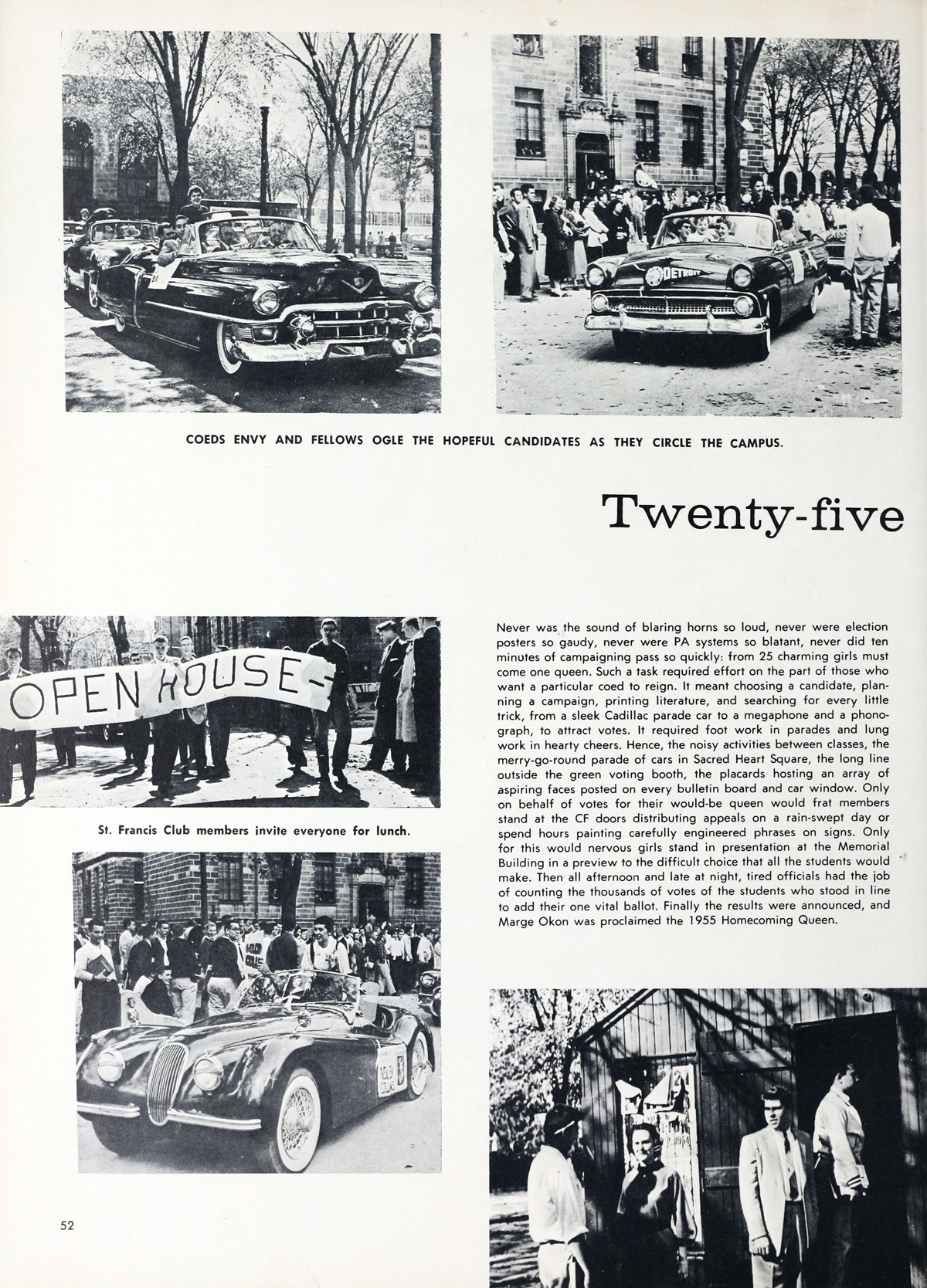
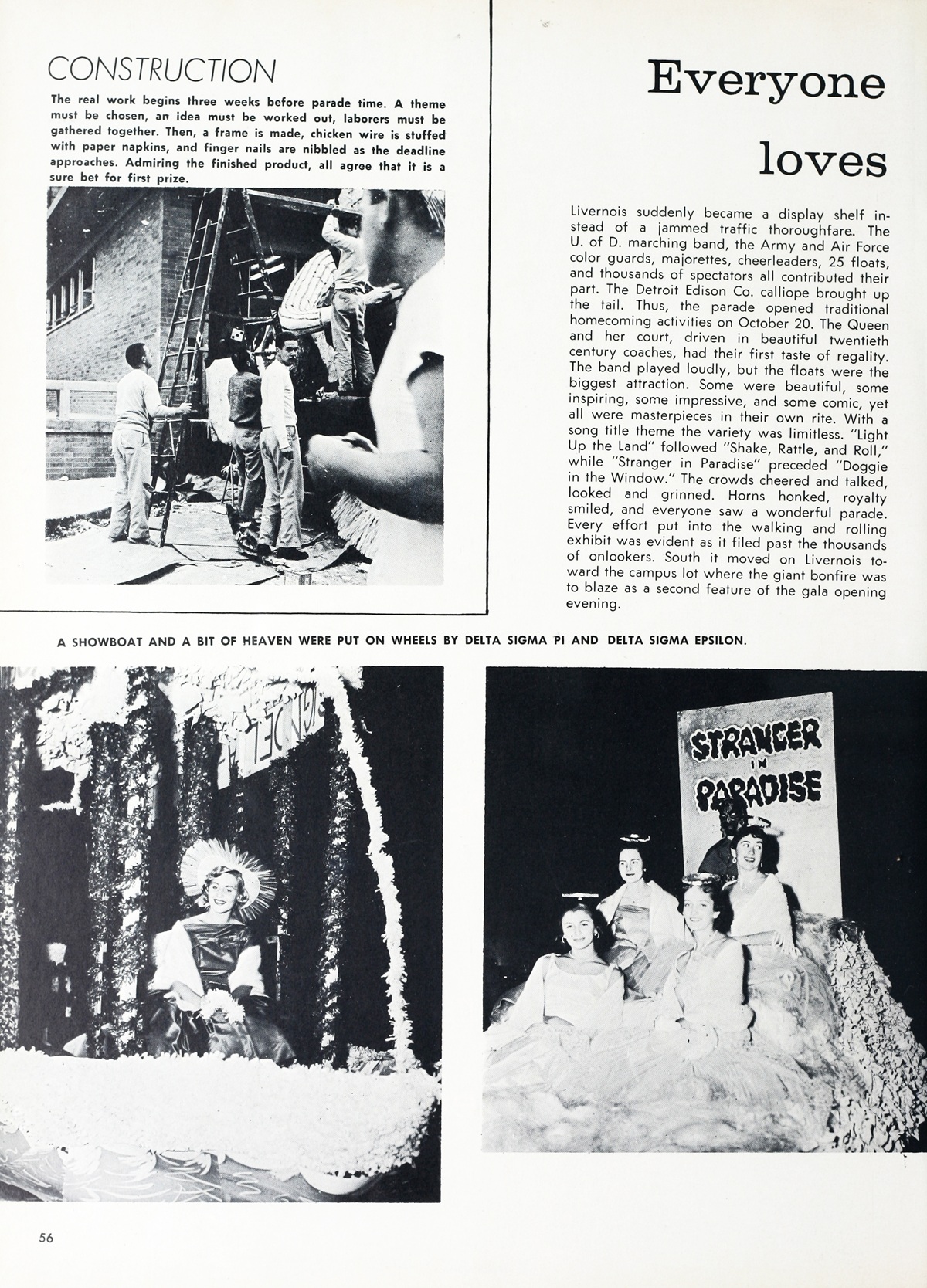
Photos at University of Detroit 1956
Arlene Schindler, Ph.D., Wayne State University
Arlene K. Schindler, Ph.D. (c. 1927 – 2025) was a prominent American educator, global training pioneer, and an early advocate for the community volunteerism movement. After completing her education at Wayne State University in Detroit, she dedicated her 50-year career to expanding professional teacher training and volunteer infrastructure across the globe.
Key Career Highlights
- Education & Early Career: She earned a Ph.D. in the psychology of learning and originally studied music during her time at Wayne State University. She began her professional life working as a teacher and administrator within the inner-city school system of Detroit, Michigan.
- International Impact: In 1968, she joined the Peace Corps and traveled to Africa to design and establish a milestone teacher-training curriculum. Over her lifetime, her work and passion for education took her to 137 countries.
- Pioneering Volunteer Leadership: Upon returning to the United States, she served as the training director for the National Center for Voluntary Action (NCVA). In this role, she helped launch localized volunteer bureaus nationwide and conceptualized the country's very first "family volunteer programs".
Arlene K. Schindler Bio at the Ellis Archive
S.S. Columbia 1957
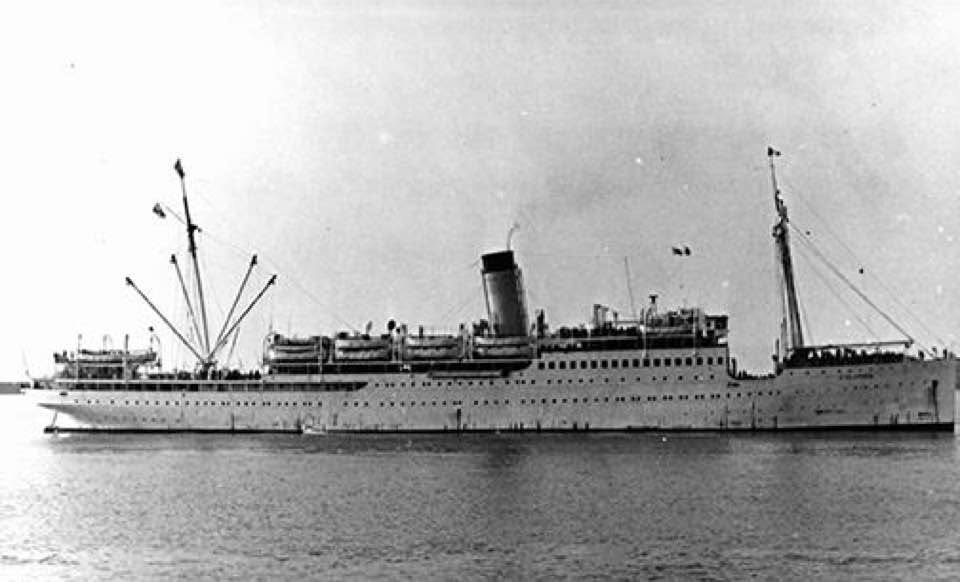
Someone's story of traveling on the S.S. Columbia from England to Quebec in 1957