The Sheeny Man: A Familiar Figure in Detroit Neighborhoods, 1930–1955
Historical background and childhood recollections by Ernest Maier. Part of the stories of growing up at 4198 Seminole Street in Detroit.
Who Was the Sheeny Man?
During the first half of the twentieth century, a familiar figure traveled through Detroit’s residential alleys collecting discarded household materials. Commonly called the Sheeny Man, sometimes spelled Shiney Man or Sheenie Man, he was a traveling junk dealer who earned his living by collecting materials that could be sold, repaired, reused, or recycled.
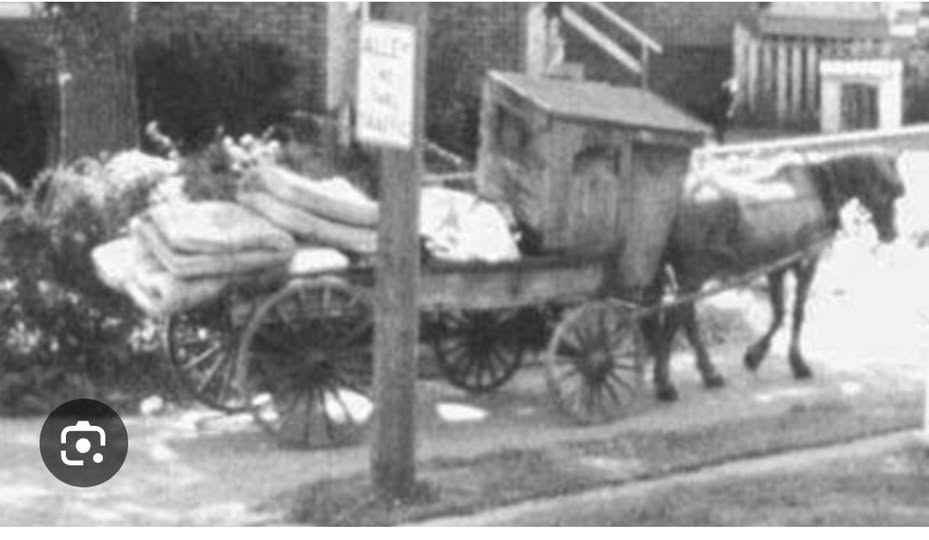
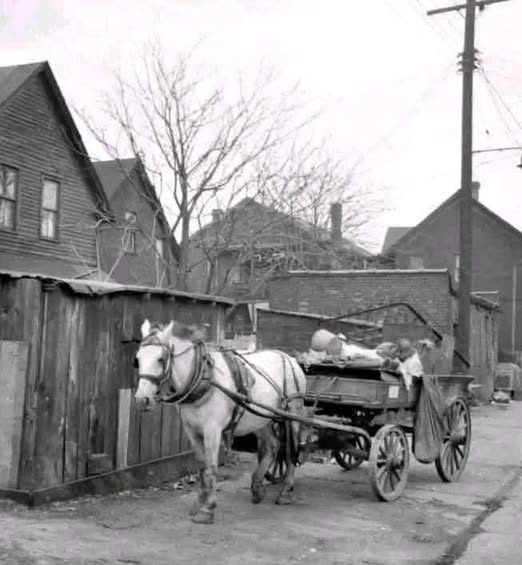
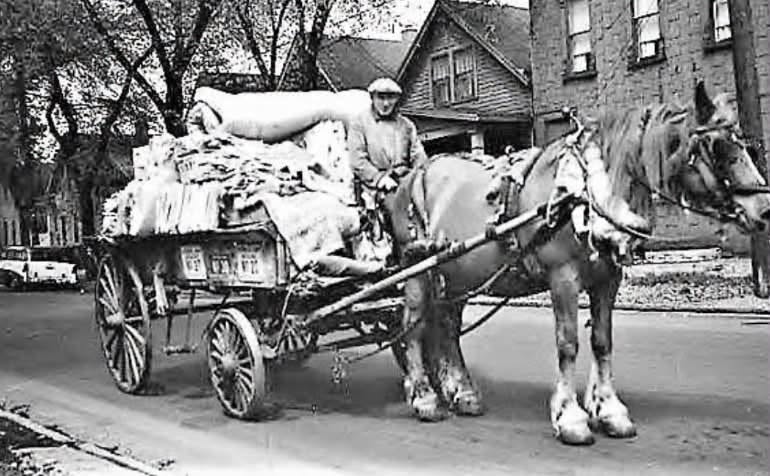
Driving a horse-drawn wagon, he collected scrap iron, tin cans, newspapers, rags, broken household equipment, and other unwanted objects. Many collectors followed regular neighborhood routes, announcing their arrival by blowing a horn or calling out so residents could bring out their materials. Their work was particularly important during and immediately after World War II.
The term “sheeny” originated as a derogatory expression for Jewish people. Although it became a commonly used neighborhood name for these collectors, its offensive ethnic origins should be acknowledged when recounting this history.
Long before modern recycling programs became commonplace, these collectors provided a practical service: recovering materials that still had economic value, reducing waste, and returning discarded objects to commercial use.
My Memories of Detroit’s East Side
I was born in 1938 and remember the Sheeny Man visiting the neighborhood around our childhood home at 4198 Seminole Street, across from St. Catherine’s Catholic Church and playground. His horse-drawn wagon traveled along the paved alley behind the houses. I do not specifically remember hearing a horn, but we knew when he was approaching.
For neighborhood children, the most important part of his visit was the opportunity to earn money. Children approximately nine to twelve years old saved scrap metal, tin cans, newspapers, and other discarded materials to sell to him. His dependable route allowed us to anticipate his arrival and prepare our collections, particularly during summer vacations.
We cleaned tin cans, including soup cans and Pet Milk cans, removed their labels, and cut out both ends. The Sheeny Man carried a scale on his wagon, weighed what we had collected, and paid us accordingly.
The payments were small—often fifteen or twenty cents, and probably averaging less than a quarter—but they represented meaningful spending money for children in the 1940s. A loaf of bread might cost about thirteen cents, and a familiar Pepsi-Cola advertising jingle promised, “Twice as much for a nickel, too.”
Other Ways Children Earned Money
Collecting scrap was one of several ways neighborhood children could earn a little money. We also cut lawns, shoveled snow, and used little red wagons to transport groceries from the neighborhood supermarket to customers’ homes.
Newspapers had another value in the community: Catholic schools conducted paper drives to raise money. Families saved their newspapers for designated collection days, when a truck would arrive to pick them up.
These activities introduced us to earning and saving money. Selling materials to the Sheeny Man also taught us that things other people discarded could still have value.
Historical Recollections from Detroit
Other accounts preserve memories of these collectors and their place in Detroit neighborhood life, from the 1920s through the 1950s.
The James T. Callow Folklore Archive at the University of Detroit Mercy includes a recollection from 1926 describing a rag and refuse collector traveling through Detroit alleys with a horse-drawn cart. The account identifies him by the neighborhood name “Sheeny Man,” placing the use of that term in Detroit at least as early as the 1920s.
Another recollection in the same archive describes a collector visiting a Detroit neighborhood during the 1940s. He wore an unusual hat, carried used brooms and miscellaneous objects hanging from his wagon, and announced his arrival with a distinctive horn. He followed a regular route, and the contributor believed different neighborhoods had their own collectors. The description presents him as a recognizable neighborhood personality as well as a junk dealer.
In a 2005 oral-history interview preserved by the Detroit Historical Society, William Pattinson remembered the Sheeny Man among the traveling tradesmen who visited Detroit neighborhoods. Alongside knife sharpeners and produce sellers, the collector brought his service directly to residents, driving a horse-drawn cart and gathering junk.
A separate childhood account from Detroit’s Poletown neighborhood recalls weekly visits during the 1950s. Residents saved unwanted household objects for the collector, whose horse-drawn wagon remained a familiar sight even as Detroit became increasingly centered on automobiles.
An Early Form of Recycling
The Sheeny Man belonged to an economy in which household objects were often repaired, reused, or sold instead of immediately discarded. By collecting and sorting unwanted materials, he helped return them to useful commercial purposes long before organized municipal recycling programs.
For children, his visits offered more than a way to dispose of unwanted objects. They provided a chance to earn a few coins through our own efforts and to recognize the value in materials others no longer wanted.
As horse-drawn transportation disappeared from Detroit neighborhoods and municipal waste collection became more organized, the traditional Sheeny Man gradually disappeared as well. Today, relatively few people remember a horse-drawn junk wagon making its way down a Detroit alley. For those who grew up there during the 1930s, 1940s, and early 1950s, however, he was part of the ordinary rhythm of neighborhood life.
His story preserves a connection among recycling, neighborhood commerce, and childhood enterprise that existed long before those activities acquired their modern names.
Historical Sources and References
University of Detroit Mercy, James T. Callow Folklore Archive: Firsthand recollections of horse-drawn junk collectors in Detroit, including accounts from 1926 and the 1940s. Additional records describe the Sheeny Man as a familiar neighborhood character and mention stories parents sometimes told children about him.
Detroit Historical Society, William Pattinson Oral History, 2005: An interview recalling the Sheeny Man alongside other traveling neighborhood tradesmen.
When I Was a Boy, “The Sheeny Man,” March 2011: A firsthand recollection of growing up in Detroit’s Poletown neighborhood during the 1950s.
Prepared October 2026. Historical research supplemented by the personal recollections of Ernest Maier, who grew up on Detroit’s east side during the 1940s.
Others tell the story
https://wowthathadtohurt.blogspot.com/2007/11/here-comes-sheeny-man.html