I Saw My Toes
By Ernest L. Maier
I must have been about four, five, or six years old when I saw something in a shoe store in Queens, New York, that I still remember more than eighty years later: the bones inside my toes, right through the shoes I was wearing.
It was during World War II, probably between 1942 and 1945. We lived at 51-01 61st Street in Woodside, Queens, at the end of a row of attached houses. Among my memories of those years—our upstairs bedroom, wartime blackouts, and neighborhood walks—this ordinary trip to buy shoes stands out.
A Walk to the Shoe Store
My mother did much of her shopping on foot. I believe the shoe store was along Queens Boulevard, within walking distance of our home, although I cannot remember its name or exact location.
My younger sister, Cathie, was still small, and my mother often used a baby carriage on our outings. I cannot say whether Cathie rode in it that particular day. Besides carrying a child, the carriage was useful for bringing groceries and other purchases home.
Neighborhood shopping meant walking to stores and carrying back what we bought. During the war, buying shoes also required careful planning.
Shoes and Wartime Rationing
When I revisited this memory in 2026, I learned more about something I had not understood as a child: most ordinary leather shoes were rationed from February 1943 until October 1945. Families needed both money and government-issued ration stamps to purchase them.
The initial allowance was approximately three pairs per person each year, with tighter restrictions later. Children's growing feet made those limits especially challenging. Parents wanted shoes that fit safely but also left enough room for growth.
A pair of children's leather shoes might cost two, three, or four dollars—a meaningful expense in those days. Using a valuable ration stamp on shoes that would soon be outgrown was another concern.
The Machine That Could See Through Shoes
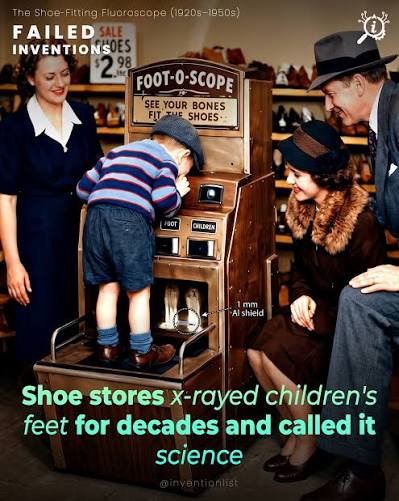
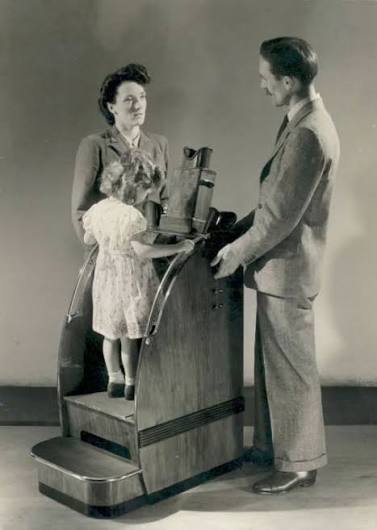
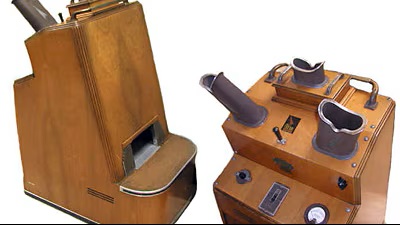
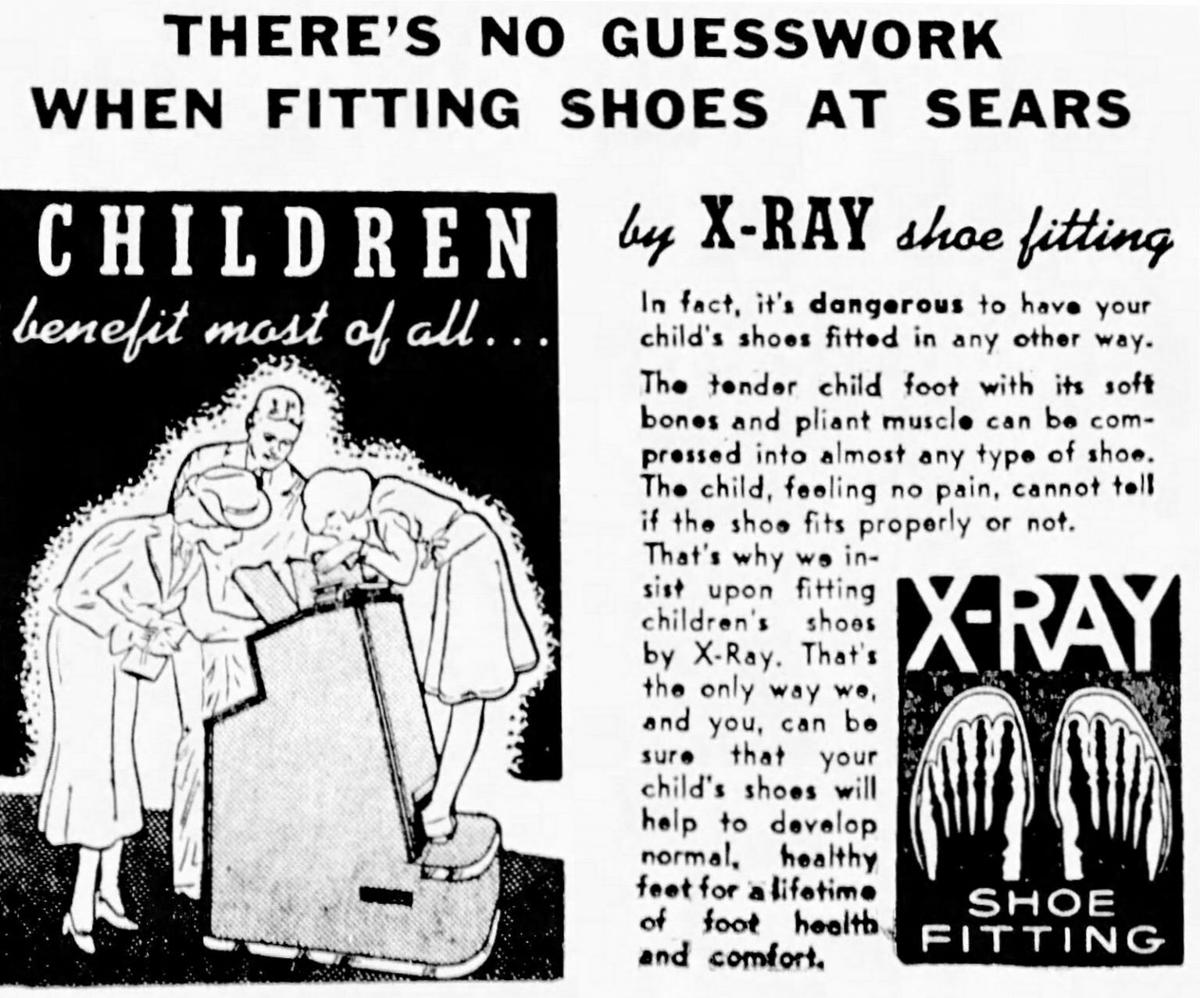
I remember a traditional shoe store with shelves of shoes, stacks of boxes, and a salesman helping customers try on different pairs. Among the ordinary merchandise stood an extraordinary machine: a shoe-fitting fluoroscope, also called a pedoscope or shoe-fitting X-ray machine.
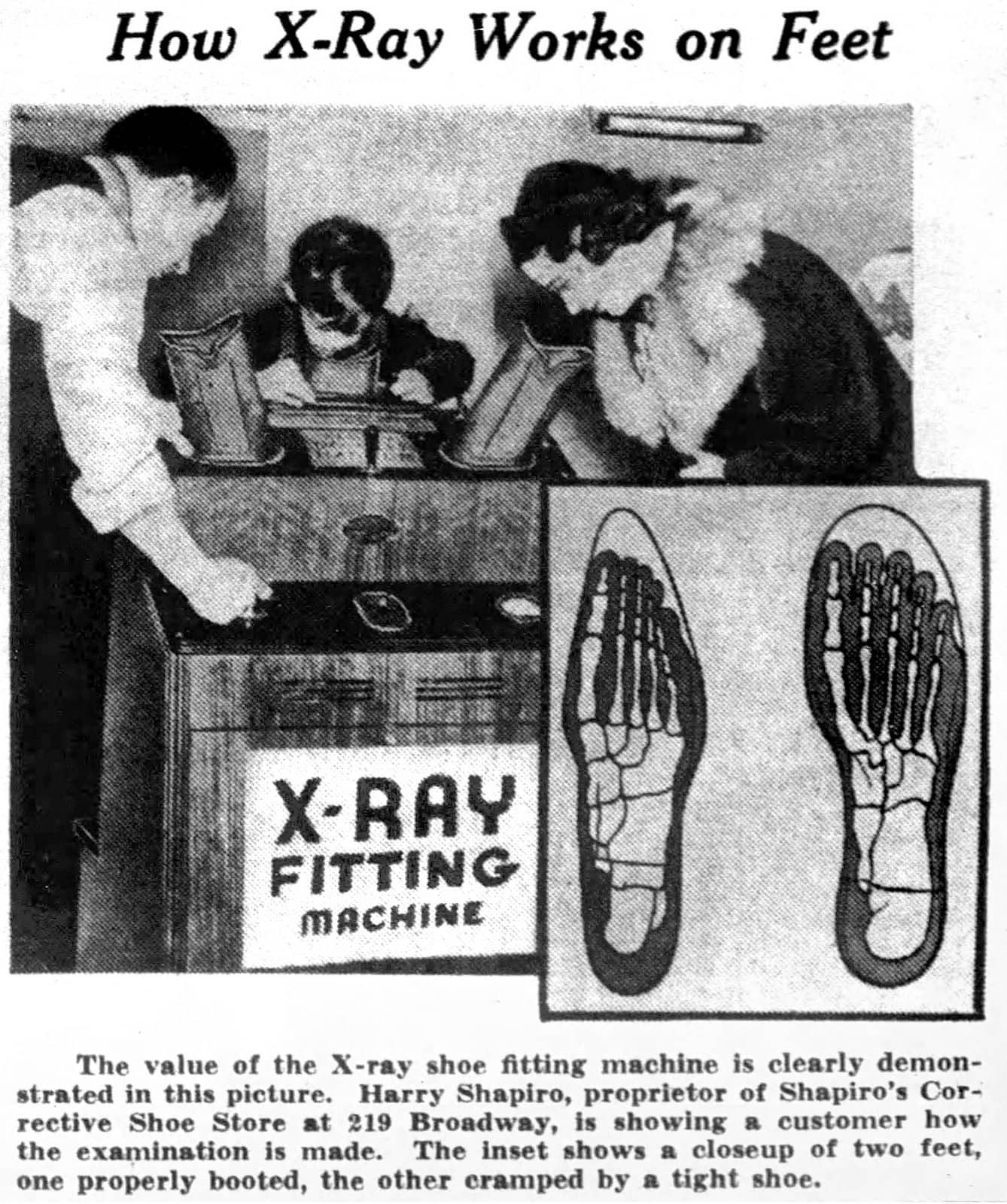
It looked like a substantial wooden cabinet, with an opening near the bottom for the customer's feet and viewing openings above. Wearing the shoes being fitted, a customer placed both feet inside. When the salesman switched it on, X-rays produced a glowing image that showed the bones of the feet inside the shoes.
The salesman, parent, and child could look through separate viewing openings. The machine was presented as a scientific way to check the fit, particularly the space between the toes and the front of stiff leather shoes.
The Sight I Never Forgot
I remember looking into the machine and seeing a shadowy, faintly glowing image of bones inside shoes. I believe they were my own feet, although after more than eighty years, I cannot rule out the possibility that I was looking at my sister's feet or another child's.
I could see the room between the toes and the ends of the shoes. I do not remember the exact amount, but the purpose was clear: leave enough space for growing feet.
To the adults, the machine helped answer a practical question. To a little boy, it was astonishing. I could see through shoes and look at bones that were normally hidden.
My Mother's Concern About My Feet
I also remember my mother massaging my feet when I was young. Something about their development concerned her, possibly along the outside edges. I do not know the diagnosis, whether a doctor recommended the massages, or whether she was simply doing what she thought would help.
Perhaps that concern made her especially interested in properly fitted shoes. A machine that showed the bones inside them must have seemed like a wonderful invention.
Whatever worried her apparently did not become a lasting problem. Today, I generally wear a size 12½ or 13 wide shoe. My feet have carried me through a long life of bicycling and traveling without any difficulty that I associate with that childhood concern.
A Marvel With Hidden Risks
The fluoroscope really could show bones through shoes, but it also exposed customers and store employees to radiation that was unnecessary for fitting footwear.
By the late 1940s, researchers were raising serious safety concerns. Children were exposed during fittings, while salespeople could encounter radiation repeatedly throughout the workday. Growing awareness and radiation regulations eventually led to the machines disappearing from shoe stores.
Today, using X-rays to fit children's shoes seems extraordinary. At the time, however, the machine was an attraction—a reassuring display of modern science for parents and a fascinating experience for children.
Looking Back
This memory brings back more than a pair of shoes. It recalls wartime Woodside, walks with my mother and sister, careful household spending, and my mother's attention to my well-being.
I cannot remember the store's name, the exact year, the price of the shoes, or even with complete certainty whose feet I saw. What remains clear is the sight of bones inside shoes and the wonder I felt.
Pictures of a neighborhood shoe store, children's footwear from the 1940s, and a shoe-fitting fluoroscope could help illustrate that world. Comparing older shoes with modern styles would also help explain why fitting stiff leather footwear mattered so much.
What began as a simple recollection led me back to wartime rationing, family life, and an invention people once accepted without understanding its risks. More than eighty years later, I still remember looking into that machine.
The bones were a good story.
A shoe-fitting fluoroscope, also called a pedoscope or shoe-fitting X-ray machine